When you’re running a small business, insurance might seem like just another expense. But trust me, having the right coverage can mean the difference between weathering a storm or closing up shop for good. Let’s dive headfirst into why small business insurance is not just important but downright critical for your survival and success.
From protecting your assets to ensuring peace of mind, having the right insurance is like having a silent partner who’s got your back when times get tough. In this comprehensive guide, we’ll explore the key elements of small business insurance, different types of coverage, and how to choose the best provider. So, buckle up, and let’s ensure your business is ready for whatever comes your way. Let’s get started!
Importance of Small Business Insurance
Did you know that 40% of small businesses never reopen after a disaster? It’s a shocking stat, but it highlights the importance of insurance. Small business insurance is not just a safety net; it’s a lifeline.
Without insurance, you’re walking a tightrope without a safety net. The truth is, insurance helps you manage risks and protects your business from unforeseen events. Imagine a sudden fire or a lawsuit – having the right coverage can save your business from financial ruin.
Risk Management and Protection
Here’s the deal: insurance is all about risk management. It’s designed to shield your business from potential threats that could otherwise cripple your operations. Whether it’s property damage, liability, or employee injuries, having insurance means you’re not alone when things go south.
- Protects against property damage from fires, floods, or theft.
- Covers legal fees and settlements in case of lawsuits.
- Compensates for employee injuries or accidents on the job.
Real-World Scenarios and Benefits
Imagine this: a bakery experiences a kitchen fire. But, with the right insurance, they can cover repair costs and lost income during downtime. Or consider a tech startup sued for intellectual property infringement. Insurance can handle those hefty legal fees.
| Scenario | Without Insurance | With Insurance |
|---|---|---|
| Property Damage | Business closure due to repair costs | Quick recovery with repair costs covered |
| Liability Lawsuit | Potential bankruptcy | Legal fees and settlements paid |
Pro Tip: “Always tailor your insurance to fit the specific risks your business faces.”
Examples of Success
Take Joe’s Coffee Shop. They had comprehensive insurance when a flood hit. While others struggled, Joe reopened within weeks. Or think about Sarah’s boutique. A slip-and-fall claim could have wiped her out, but her insurance picked up the tab.
These stories aren’t just anecdotes – they’re proof. Proof that smart coverage means survival.
Types of Small Business Insurance
You’ve got a small business, but do you have the right insurance? This isn’t just about checking a box; it’s about safeguarding your livelihood.
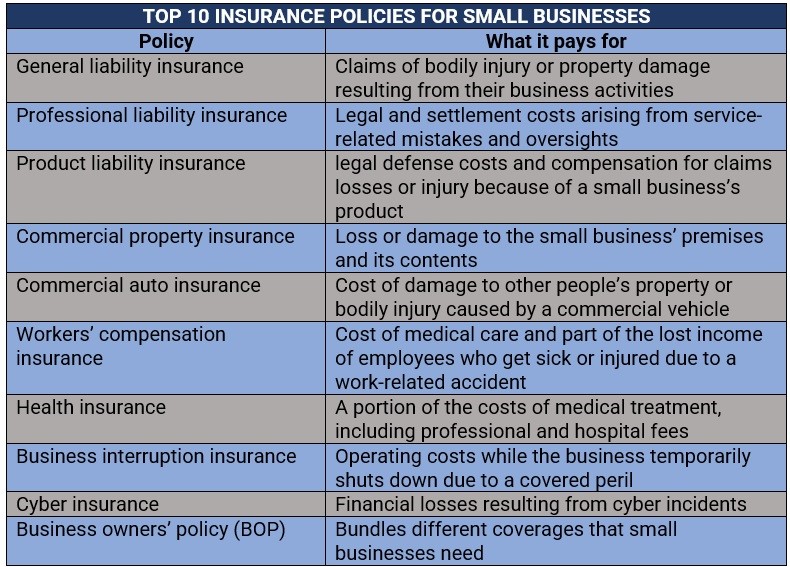
There are several types of insurance policies you need to consider. Each one covers different aspects of your business, and selecting the right mix can be the difference between smooth sailing and disaster.
General Liability Insurance
General liability insurance is like a Swiss Army knife for your business. It covers everything from bodily injury to property damage. If a customer slips and falls in your store, this policy has your back.
BUT here is the deal: it’s not just about covering accidents. It can also protect you against advertising injuries, like slander or copyright infringement.
Property Insurance
Property insurance is essential if you own or lease your workspace. It covers damage to your building and contents from fires, thefts, and natural disasters.
This is a must-have if you have a brick-and-mortar location. However, don’t assume your rental agreement covers everything. Check the fine print!
Workers’ Compensation Insurance
If you have employees, you need workers’ compensation insurance. This type of insurance covers medical expenses and lost wages if your employees get injured on the job.
Many states require it, and skipping this coverage can lead to hefty fines and lawsuits. Here is the bottom line: don’t skip this policy if you have even one employee.
Determining Necessary Insurance
So, how do you know which insurance your small business needs? Start by assessing your risk. What’s the likelihood of a customer accident or property damage? Consider your industry standards too. Some sectors have specific requirements.
Pro Tip: Consult an insurance agent who specializes in small businesses. They can tailor your coverage to your exact needs.
Comparative Table of Insurance Types
Let’s break it down. Here’s a quick comparison of the most common types of small business insurance:
| Insurance Type | Coverage | Benefits |
|---|---|---|
| General Liability | Bodily injury, property damage, advertising injury | Protects against lawsuits, covers third-party injuries |
| Property Insurance | Fire, theft, natural disasters | Secures your physical assets |
| Workers’ Compensation | Employee injuries, medical expenses | Legal requirement, covers employee claims |
Factors Affecting Insurance Cost
Have you ever wondered why your small business insurance costs what it does? The truth is, several variables come into play.
Let’s break down the factors that can jack up or slash your premiums.
Business Size, Industry, and Location Impact
The size of your business can be a big deal when it comes to insurance costs. A mom-and-pop shop might pay less than a bustling mid-sized enterprise. Why? Because a smaller business typically presents a lower risk. The industry you operate in matters too. If you’re in construction, your premiums might skyrocket compared to a tech startup. And don’t forget about location. A business in a crime-prone area might face higher costs due to increased risk.
Elements Influencing Premiums
Insurance providers are meticulous about assessing risk. They look at everything, from your claims history to your business’s financial health. Let’s get into some key factors insurers use to set premiums:
- Type of Coverage: More comprehensive policies cost more.
- Claims History: A history of claims can increase your premiums.
- Business Assets: High-value assets are more expensive to insure.
- Employee Count: More employees usually mean higher premiums.
- Business Revenue: Higher revenue can lead to higher insurance costs.
Cost-Effective Strategies to Lower Insurance Costs
Paying less for insurance isn’t just a dream; it’s achievable if you play your cards right. Here’s the deal: start by bundling your policies. Many insurers offer discounts if you buy multiple types of coverage from them. Boosting your security measures can also lead to savings. Installing security cameras or fire alarms could lower your risk and your premiums. Finally, consider increasing your deductibles if you’re confident about not filing small claims.
Pro Tip: Regularly review and update your insurance coverage to ensure you’re not overpaying for outdated policies.
Common Claims and Coverage

Did you know that 40% of small businesses will file an insurance claim in the next ten years? That’s a staggering number! Whether it’s due to property damage, liability issues, or employee injuries, understanding the most common claims is crucial.
Let’s dive into the types of claims small businesses typically face and how having the right coverage can save you from financial ruin.
Understanding the Top Claims Filed by Small Businesses
Property damage is often at the top of the list. Imagine a burst pipe flooding your store or a fire destroying your office. It’s not just an inconvenience – it can be catastrophic. And guess what? General liability insurance can cover these disasters.
Then there’s the ever-dreaded liability claim. Picture this: a customer slips on your freshly mopped floor. You could be looking at a costly lawsuit, but liability insurance has your back.
For small businesses with employees, workers’ compensation claims are also common. Injuries happen, and having workers’ comp is not just smart; it’s often legally required.
How Different Policies Cover These Claims
Each type of insurance covers specific risks. Here’s how they stack up:
| Claim Type | Policy Coverage |
|---|---|
| Property Damage | General Liability or Commercial Property Insurance |
| Liability Claims | General Liability Insurance |
| Workers’ Compensation | Workers’ Compensation Insurance |
Real-Life Examples of Business Claims and Outcomes
Let’s get real. A small bakery in Boston faced a major setback when a fire damaged their kitchen. Thanks to their commercial property insurance, they were back in business within weeks. Then there was a tech startup that got hit with a lawsuit over a breach of contract. Fortunately, their liability coverage helped cover the legal fees.
These examples aren’t just stories; they’re reminders of why having the right coverage is essential.
The Importance of Appropriate Coverage
Without the right insurance, a single incident can be devastating. Here’s why you need to be covered:
- Reduces the chance of financial loss from unforeseen events.
- Ensures compliance with legal requirements.
- Protects your business assets and peace of mind.
Pro Tip: Review your insurance policies annually. Update coverages as your business evolves to avoid any gaps.
Choosing the Right Insurance Provider
Did you know that choosing the wrong insurance provider can cost your business thousands? The truth is, not all insurance companies are created equal.
Here’s the deal: finding the right provider is crucial for protecting your business from unexpected disasters. The right provider can mean the difference between a minor hiccup and a financial catastrophe.
Criteria to Consider When Selecting an Insurance Provider
First things first, you need to evaluate the provider’s reputation. Do they have a history of timely payouts, or are there horror stories of constant delays? Look at their financial stability too. A provider with shaky finances might not be able to cover your claims when things go south.
Step #1: Check online reviews and ratings. Sites like Trustpilot or Better Business Bureau can give you an idea of what to expect. Step #2: Consider the range of coverage options they offer. You want a package tailored to your business needs, not a one-size-fits-all policy.
Evaluating Reliability and Reputation
Remember, a provider that can’t reliably pay out isn’t worth your time. Look for providers with a solid reputation in the industry. A little digging can reveal if they have any legal issues or bad press.
Pro Tip: Speak directly to other small business owners in your area. Their first-hand experiences can be invaluable.
Methods for Comparing Insurance Quotes Effectively
When comparing quotes, don’t just look at the price. Consider deductibles, policy limits, and any exclusions that might leave you exposed. An attractive premium might hide expensive gaps in coverage.
Step #1: Use online comparison tools to get a quick overview of what’s available. Step #2: Contact providers directly to clarify any uncertainties. Step #3: Ensure you’re comparing apples to apples. A cheap quote might exclude essential coverages you need.
| Provider Name | Coverage Options | Customer Reviews | Pricing |
|---|---|---|---|
| Provider A | General Liability, Property, Workers’ Comp | 4.5/5 | $$ |
| Provider B | General Liability, Professional Liability | 4.0/5 | $$$ |
| Provider C | Property, Business Interruption | 3.8/5 | $ |
Navigating Insurance Claims Process
Did you know that nearly 40% of small businesses will file an insurance claim in any given 10-year period? Filing a claim might seem daunting, but it’s crucial for safeguarding your business. Here’s how to navigate the process like a pro.
The insurance claims process can be intimidating, especially if you’re unprepared. BUT, having a clear roadmap can make all the difference. Let’s break it down into actionable steps.
Steps to File an Insurance Claim
Filing a claim starts with understanding your policy. Step #1: Review your insurance policy to know what’s covered. Next, Step #2: Document the incident with photos and detailed notes. This documentation is crucial when you contact your insurer. Step #3: Notify your insurance provider as soon as possible and provide them with all necessary information. Follow up regularly to ensure your claim is being processed smoothly.
Essential Documentation Required
Documentation is your best ally. Make sure you have all the necessary paperwork before filing a claim. You’ll need a detailed account of the incident, photos, and estimates for repairs or replacements. If you had to make temporary repairs, keep those receipts. Here is the deal: missing documents can lead to delays, so being thorough is essential.
Common Challenges and Solutions
Challenges are part of the process, but knowing how to tackle them helps. A common issue is denied claims due to insufficient evidence. Pro Tip: Keep meticulous records of all interactions with your insurer. If your claim is taking too long, politely but persistently follow up. Sometimes, hiring a public adjuster might be necessary to ensure a fair settlement. Remember, persistence often pays off.
Conclusion
As we wrap up, remember that having the right small business insurance is more than just a smart business move; it’s a necessity to safeguard your passion and livelihood. By understanding the nuances of different insurance types, costs, and providers, you’re one step closer to securing your business’s future. So go ahead, choose wisely, and sleep better knowing you’ve got everything covered.
Answers to Common Questions
What is the most important type of insurance for small businesses?
General liability insurance is often considered crucial as it covers common risks like injuries or damage to property.
How can I lower my small business insurance costs?
Consider bundling policies, increasing deductibles, and implementing risk management practices to reduce premiums.
Why does my business location affect insurance premiums?
Location impacts risk factors such as crime rates and natural disasters, influencing the cost of insurance.
What should I look for in an insurance provider?
Evaluate their reputation, financial stability, coverage options, and customer service quality.
How soon can I file a claim after an incident?
Most policies require you to file a claim as soon as possible after an incident occurs to ensure coverage.
